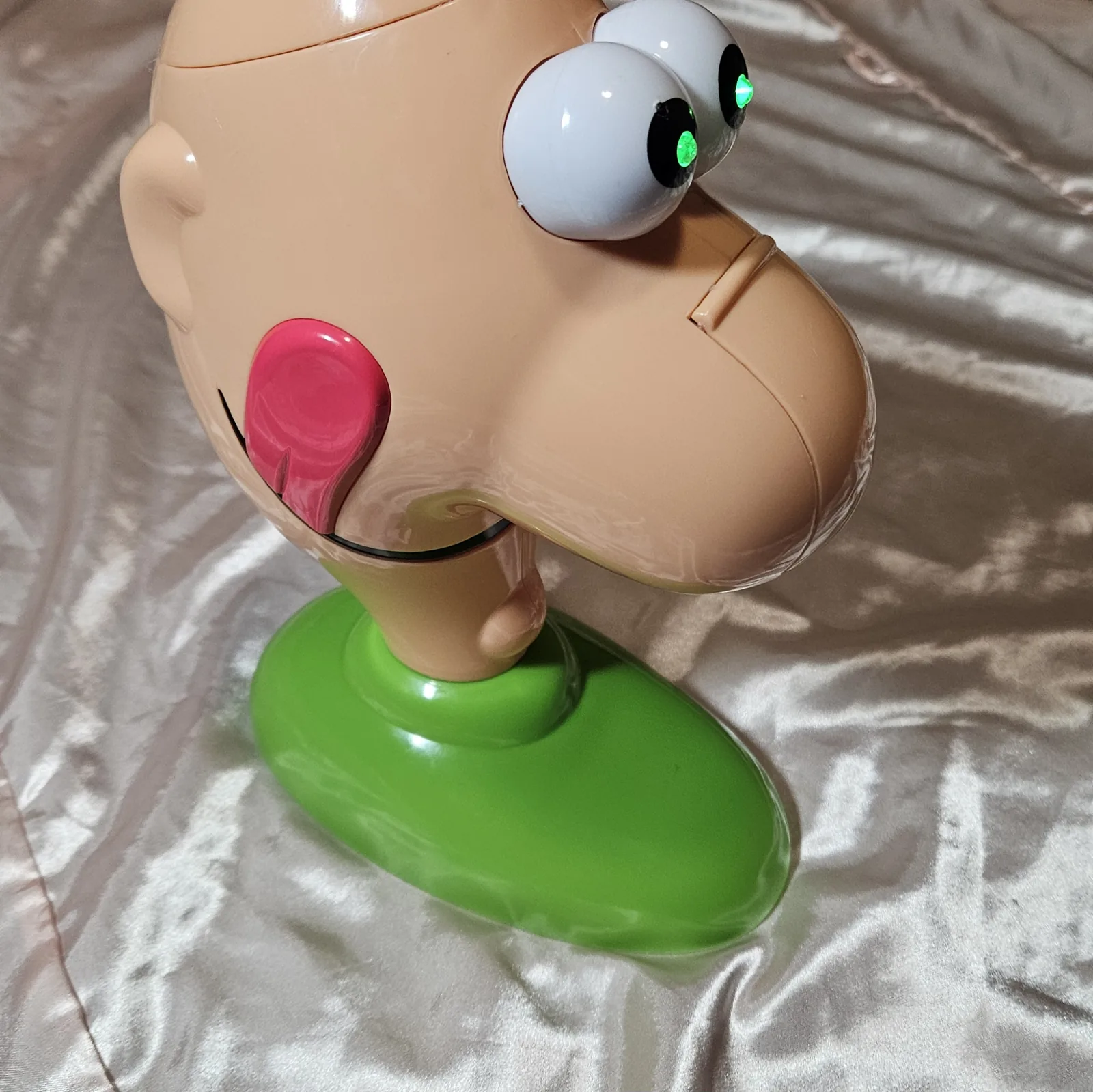
Build Log · Lo-Fi ISD1820 Looper
Loopy Louie
A lo-fi record-and-loop box built around the humble ISD1820 voice-recorder chip and crammed into a gutted Gooey Louie game head - yes, the one where you yank boogers out of his nose. Feed him a few seconds of anything and he loops it back forever, with a pitch knob that drags the loop from a slow, gluey groan up to a chattery squeal. An added amplifier makes him actually loud, and two green LEDs drilled into his googly eyeballs mean he stares right back while he chews on your sound.
- TypeLo-fi ISD1820 looper (one-off circuit-bent build)
- HeartISD1820 record / playback IC
- LoopRecord a few seconds - it plays back and repeats
- PitchKnob on the sampling-frequency resistor - warps speed & pitch
- AmpAdded onboard amplifier + speaker - louder than the bare chip
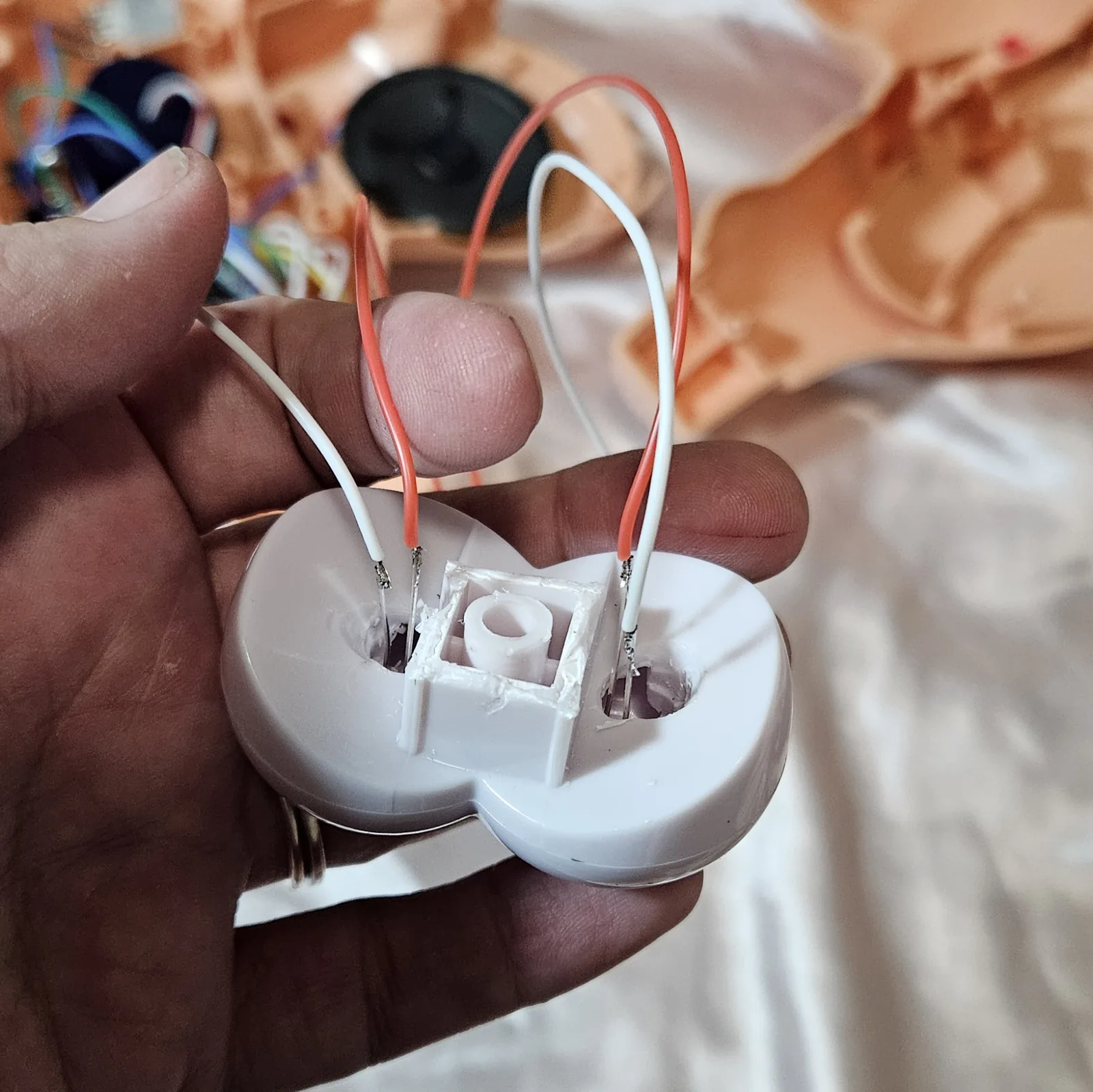
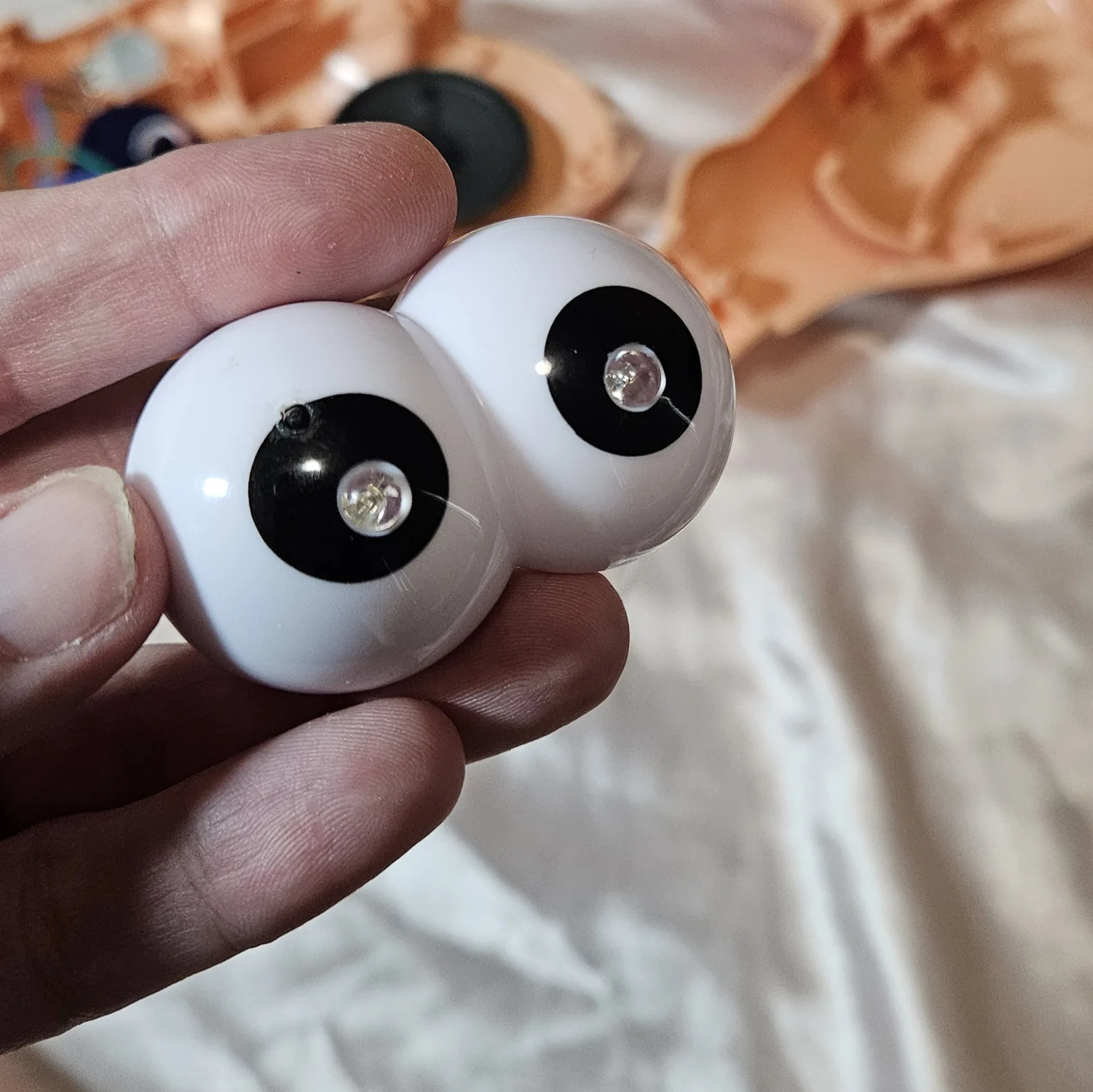
- EyesGreen LEDs set into the drilled-out googly pupils
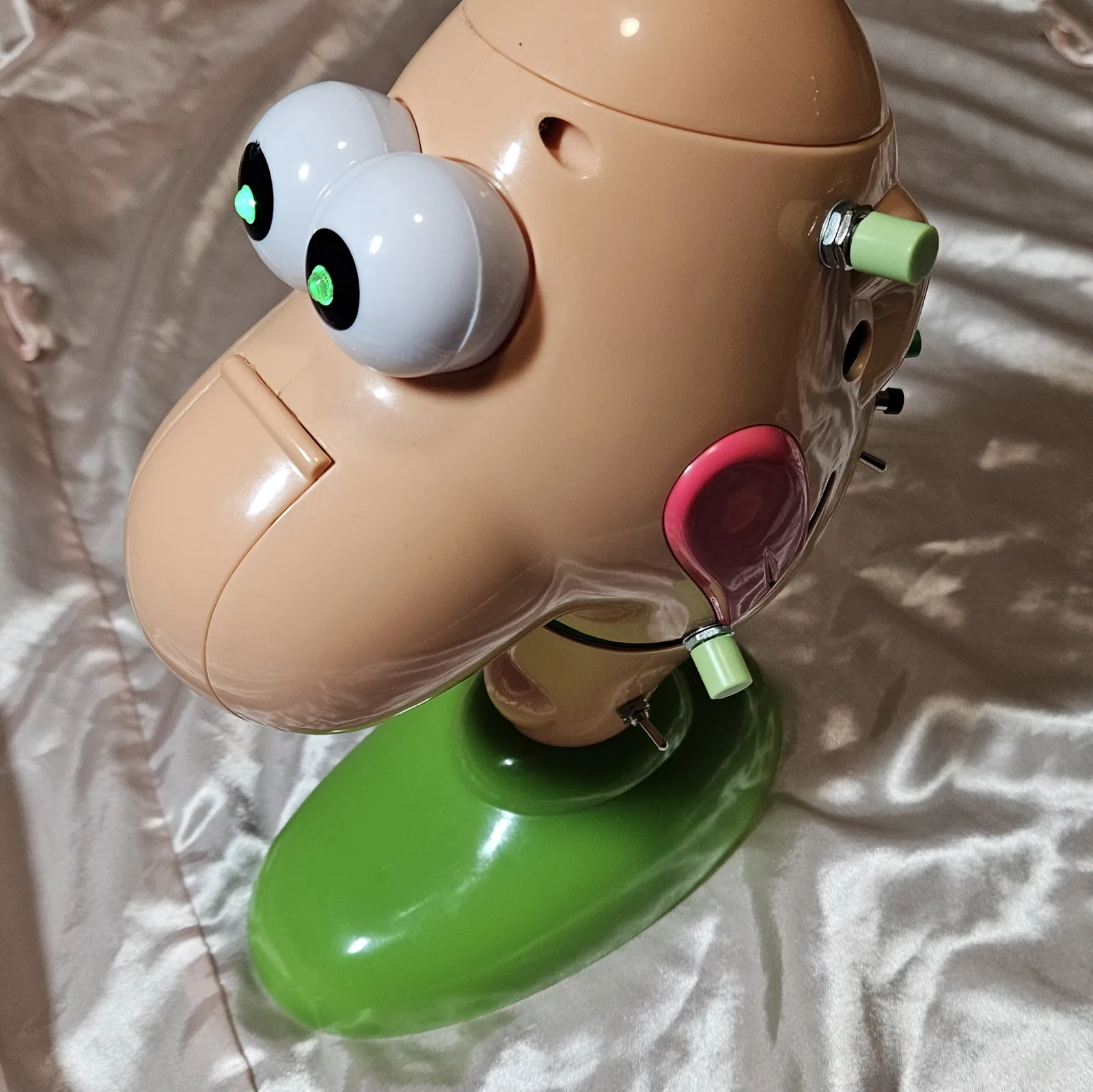
- ControlsRecord · play · loop · pitch · volume · power
- HousingHasbro “Gooey Louie” game head on its green base
- PowerInternal vape-cell pack (~3.7V)
- StatusFinished July 2026 - one of a kind
What it is
The ISD1820 is a dirt-cheap voice-recorder IC - the guts of a talking greeting card. It records a few seconds of audio into non-volatile memory and plays it right back, and it'll happily loop that clip until you stop it. On its own it's a toy. Bent to a purpose - a pitch mod, a real amplifier, and a face - it's a gloriously grimy little looper.
Loopy Louie lives in a Gooey Louie, Hasbro's mid-90s pull-the-boogers game. The head was the perfect enclosure: hollow, expressive, and already staring. I gutted the original game, dropped in the ISD1820 and an amp, ran the controls out through his cheek, and put green LEDs where his pupils used to be. He's Bent Brooks' cousin - same chip, same pitch trick, very different attitude.
The build, start to finish
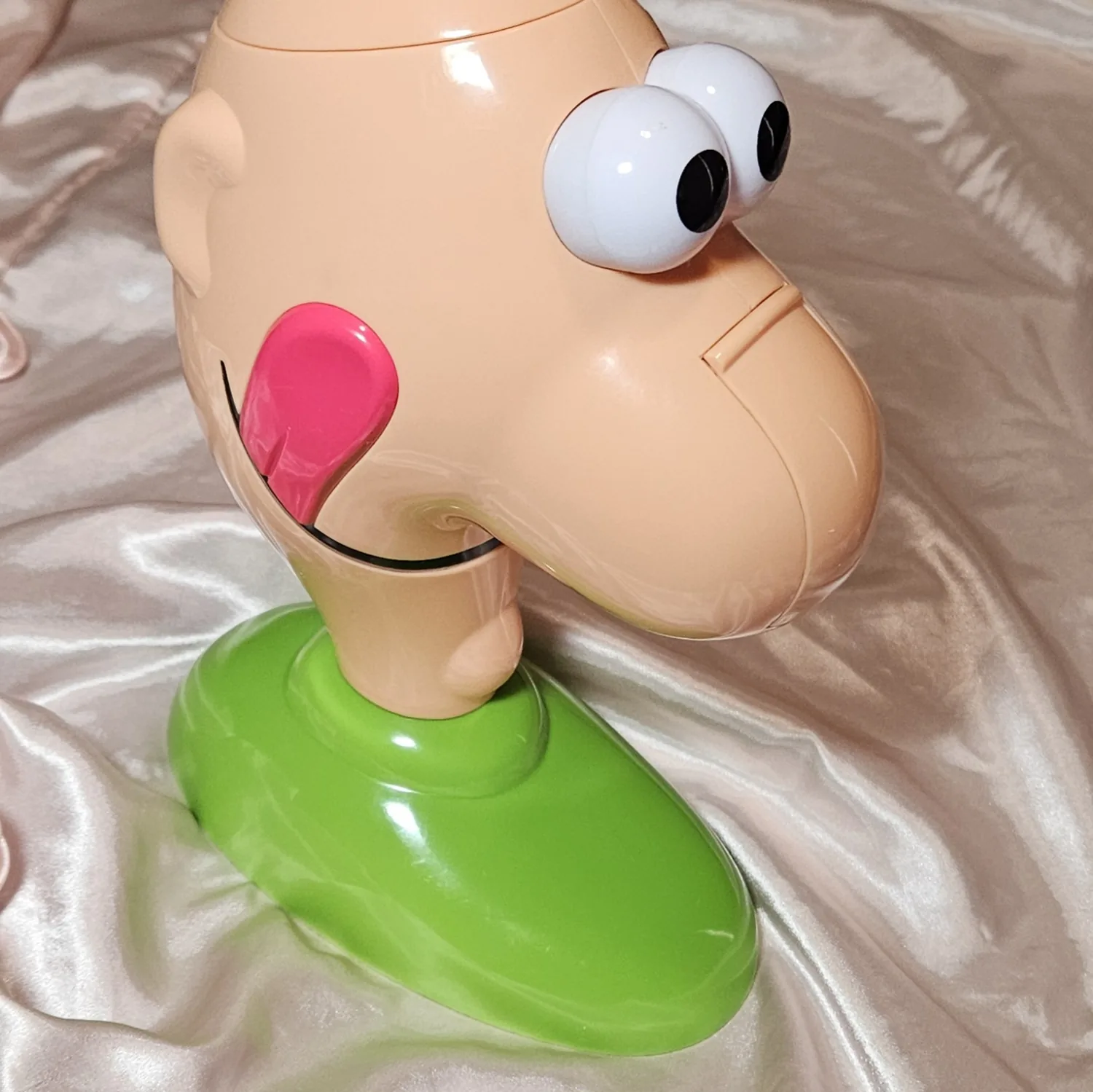
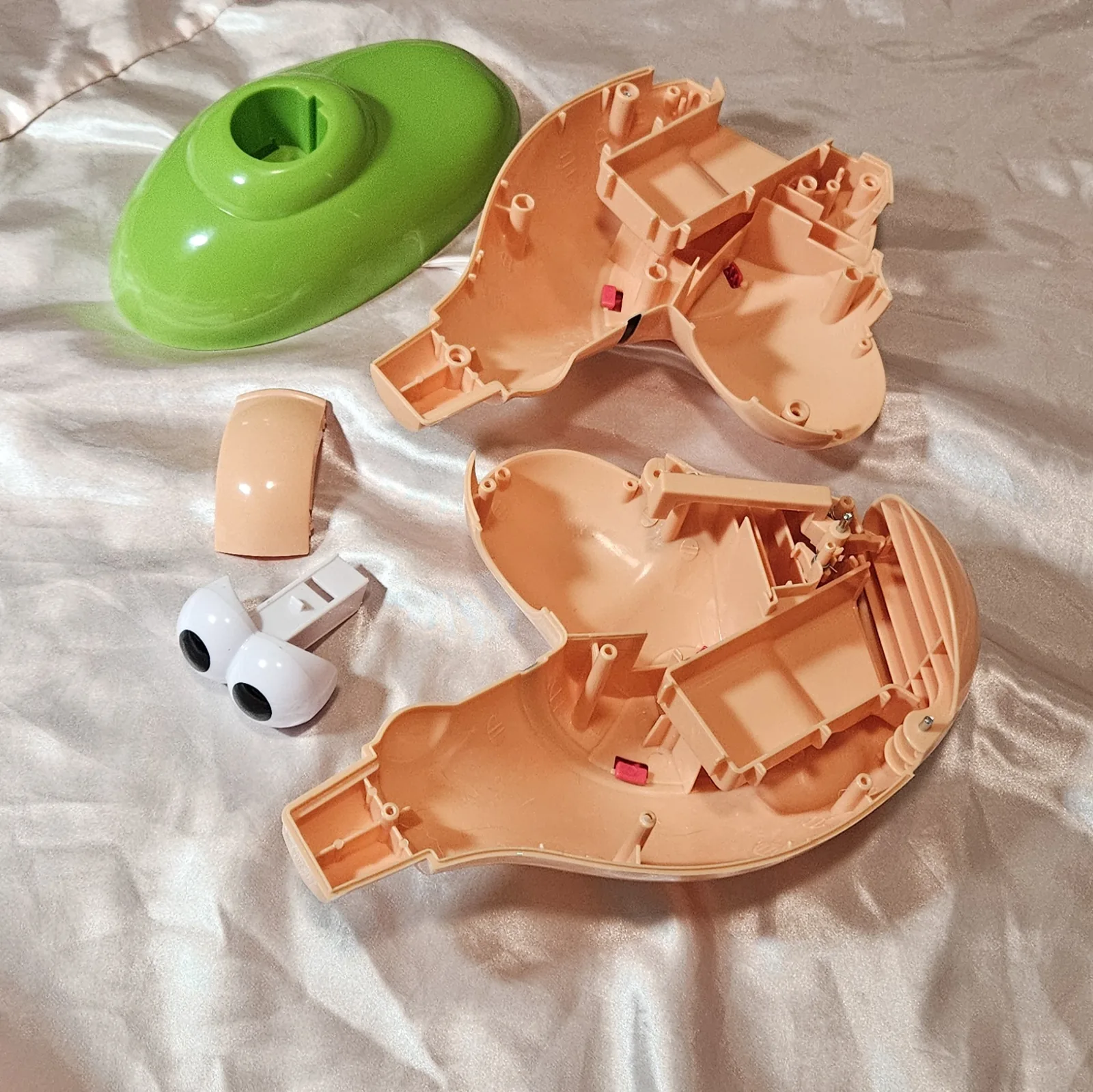
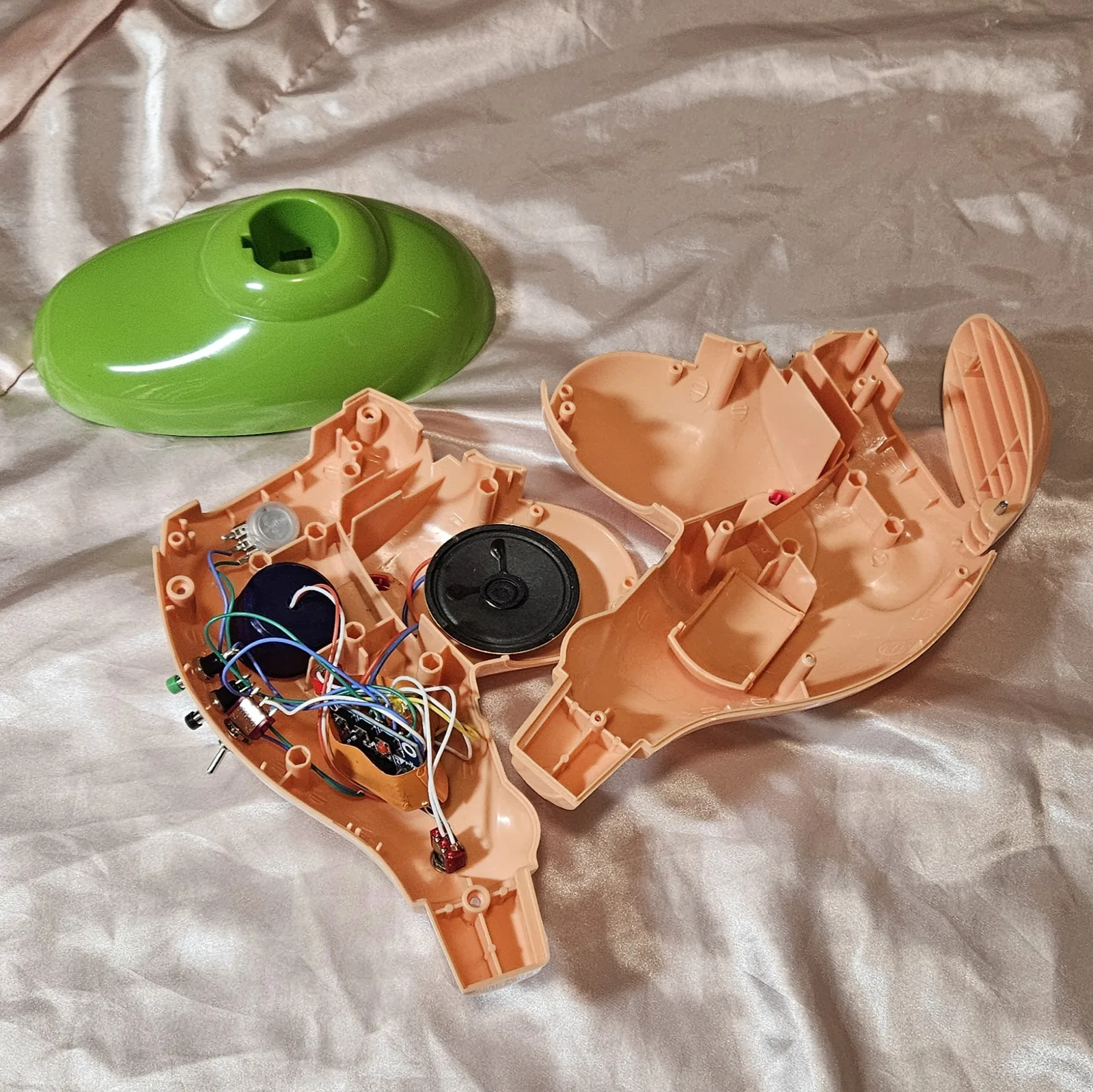
Controls & play
- Record - green button
- Hold to record - feed him a voice, a note, a scrap of a song, whatever's in earshot. The microphone sits in his ear.
- Play - black button
- Fires the recorded clip once, straight through.
- Loop - toggle
- Flip it and the clip runs back to back until you flip it off - the whole point of the box.
- Pitch - green knob at the back of the head
- Sweeps the sampling / playback frequency: one way for a deep, dragging, half-speed groan; the other for a fast, brittle, high squeal. Everything between is fair game.
- Volume - green knob by the mouth
- Sets how loud the onboard amp drives the speaker.
- Power - switch on the neck
- Toggle on the supply - an internal vape-cell pack. Eyes light green when he's awake.
Under the hood
| Core | ISD1820 record / playback IC |
|---|---|
| Loop | Records a few seconds to non-volatile memory and plays it back on repeat |
| Pitch mod | Onboard sampling-frequency resistor (R4) swapped for a potentiometer, so the knob sweeps pitch and playback speed together |
| Amplifier | Added amp stage driving the speaker - noticeably louder than the ISD1820's own output |
| Eyes | Two LEDs installed in the drilled-out googly-eye pupils, glowing green |
| Controls | Green record button, black play button and loop toggle down the side of the head; pitch knob at the back of the head, volume knob by the mouth, power switch on the neck. Microphone in the ear. |
| Output | Internal speaker - plays on its own, no external jack |
| Power | Internal parallel pack of salvaged vape cells (~3.7V) - see how I build the pack. The ISD1820 runs happily at 3.7V, and wiring the cells in parallel buys double the runtime instead of more voltage. |
| Housing | Hasbro “Gooey Louie” game - head shell + green base, original game guts removed |
| Build | Circuit-bent, wired, amped, and finished by Onion Madder - fully one of a kind |
Gooey Louie is a game by Hasbro (© Hasbro), referenced here in tribute only - this is an unofficial, one-off circuit-bent build, not affiliated with or endorsed by the rights holders. All teardown, wiring, amping, and finish by Onion Madder.